
Aaron is finally able to be in a safe and loving family after reuniting with his uncle, brothers, and cousins.
Tragedy strikes twice
Aaron Mulabbi was born on 17th February 2012, in Luuka District, Uganda, to his late parents, Mulabbi Samuel and Mulabbi Sarah. Tragically, Aaron's mother passed away shortly after birth, leaving him and his older brother in the hands of his father, grief-stricken and struggling financially and emotionally to raise his three boys.
Two years later, Aaron's father was killed in a car accident just two years after his wife's passing, leaving Aaron and his brothers as total orphans. Now, Aaron and his two brothers had one surviving relative left, an uncle named Kajamiti Amos.
Unfortunately, Kajamiti was still young and could not yet afford to care for the three boys. Hence, the local leaders advised him to seek help from us at St. Philomena Babies Home, where we admitted Aaron into our care in 2014.
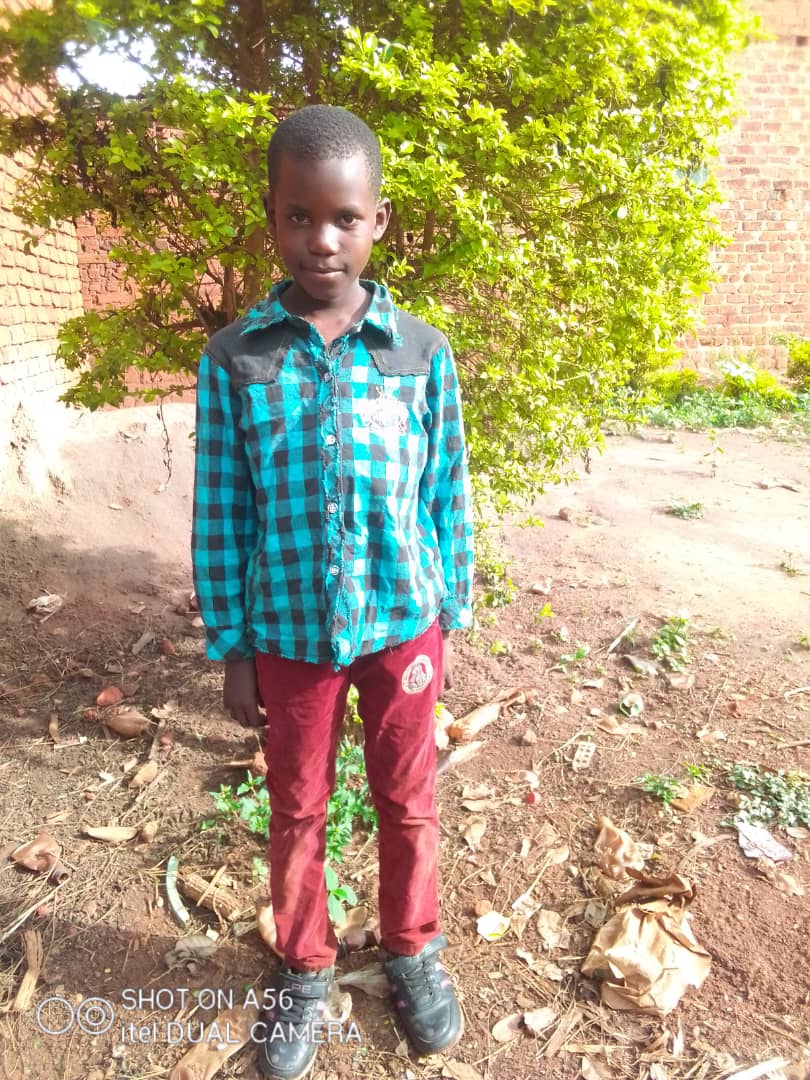
Aaron Mulabbi poses for a photo
Fostering an unbreakable bond with his uncle
Because Aaron was two years old when we admitted him into our care, he wasn't yet school age. He was able to start kindergarten at three the following year. His uncle Kajamiti never ceased coming to visit him whenever possible.
We facilitated extended visits over the holidays where Aaron would stay with his uncle and be brought back at the beginning of the school term. It was hard for Aaron to say goodbye to his uncle and family, whom he loved dearly.
He would cry after his uncle left every time, which was a positive testament to their relationship and a sign that reunification needed to happen as soon as possible. Aaron never wanted to be separated from his uncle, which made the bonding process quickly successful.
Barriers to success in reuinification
Kajamiti Amos, Aaron's uncle, was now a primary school teacher who made very little. So we knew very quickly that if this family were to be reunited successfully and kept together, they would need support for self-sustainability and financial empowerment.
Unfortunately, that is the reality of this situation (and many others); despite how much love exists in a family, finances and lack of support and services can threaten to pull families apart.
Pursuing kinship care
At the beginning of the first Covid-19 lockdown, when we were unsure when and how it would end, we decided to take Aaron to continue bonding with his uncle. Despite being given the option to return to our Home, Aaron chose not to. Instead, he was thrilled to live with his uncle, even though he did not get all the same privileges he used to get at our Babies Home-showing that children prefer to live in families.
Kajamiti Amos was also caring for Aaron's orphan cousins and brothers at the same time, making it virtually impossible to give all of the children a proper education. Aaron was enrolled in a school that lacked funding due to many enrollees being from low-income families. Despite his education lacking, Aaron is a naturally bright boy who is now even happier living with his uncle, brothers, and cousins.
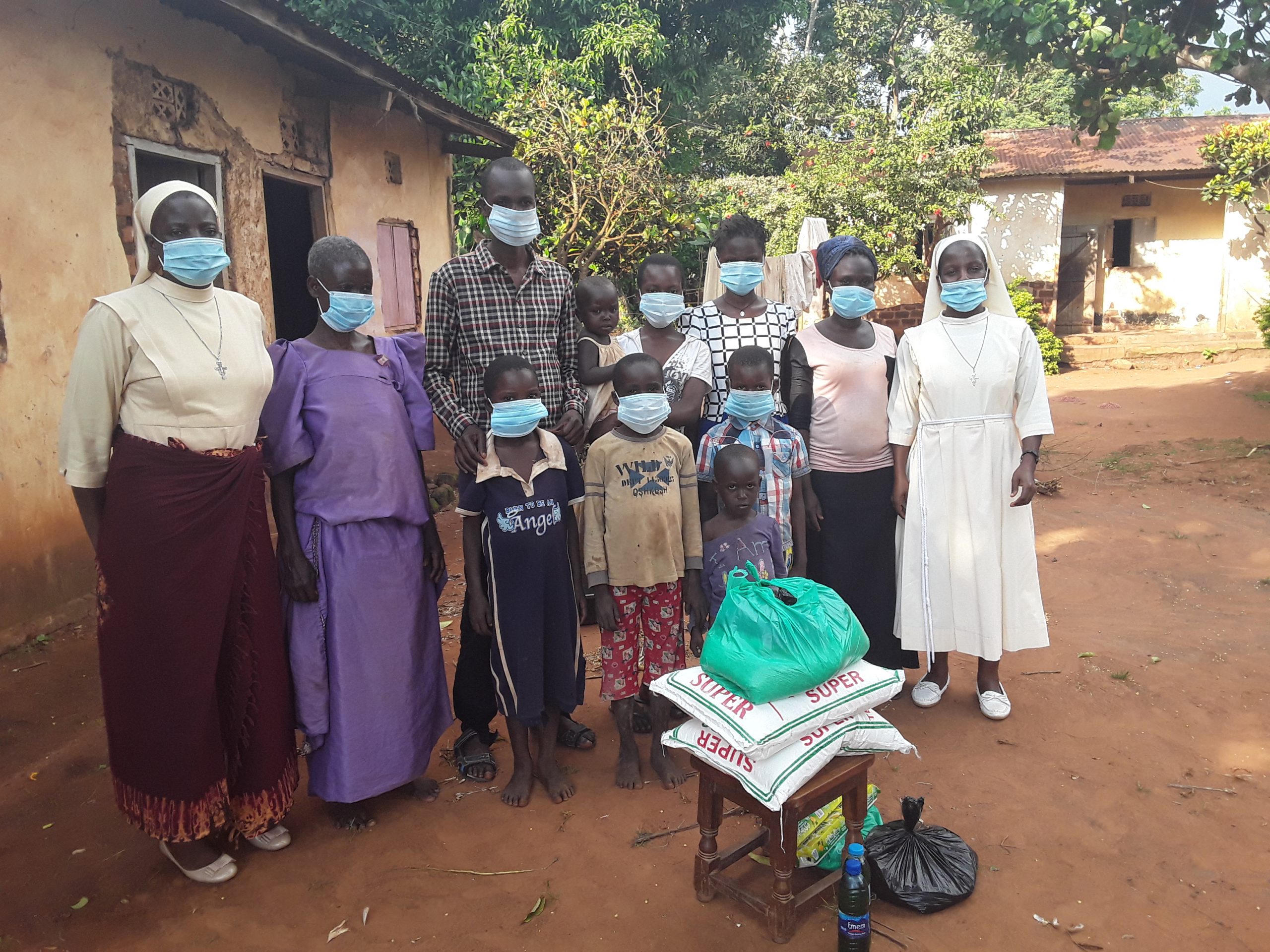
Aaron Mulabbi, his uncle, and the rest of his loving family after reunification.
Seeking support for Aaron and his family after reunification
As a Child Care Institution, we care for children admitted into our home and provide many other services: family tracing, assessment, bonding, resettlement, following up, and case closure.
Since Aaron's reunification in 2019, our CCI has been unable to support them towards self-sufficiency in all the ways we wish to, apart from occasional little food support. This is because our home struggles financially to keep the needs of the children in the CCI. Still, once all children are in families, we know that we will be better able to impact and support families to reach their fullest potential and achieve self-sustainability.
Pursuing kinship care for all children
The Ministry of Gender Labor and Social Development emphasizes that the family is the best place for child upbringing. We at St. Philomena believe in the sustainability of family-based care. Home-based care should replace CCIs (Child Care Institutions) with Home-based care; that is to say, organizations should support vulnerable children to live in families.
Children come to our CCI at a tender age; they have no option to oppose since they are orphaned or abandoned. They cannot resist separation from their primary caretakers, so we seek to advocate for all children in our care and community, similar to how we supported Aaron.
Following-up with Aaron
We conducted another family assessment on 1st April 2021 and confirmed what we already knew. Aaron still wished to stay with his family and did not wish to return to the Babies Home despite the family's financial struggles.
His uncle was now married, and his uncle's wife also was able to bond positively with Arron and adored him. Kajamiti still cared for Aaron, his brothers, and cousins but was still earning very little as a teacher aside from the profits from their garden. Therefore, we know he needs more financial support to continue to raise these children.
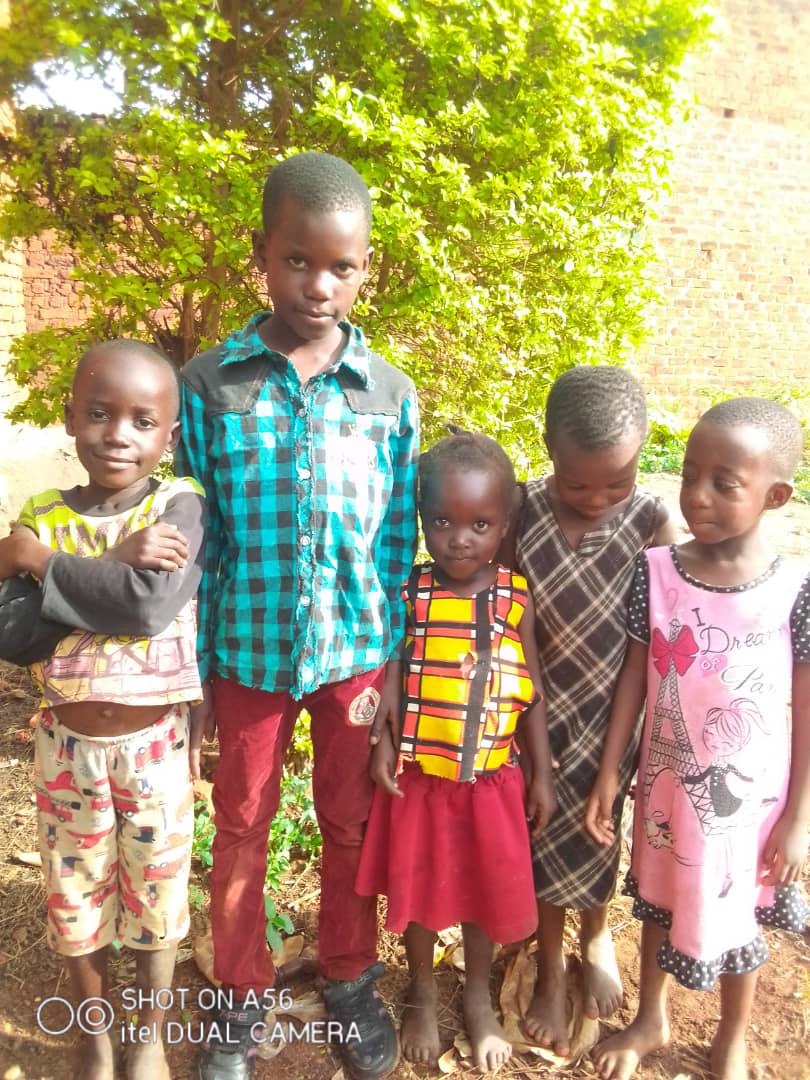
Aaron Mulabbi and his family
This is a familiar story
The story of Mulabi Aaron reflects the stories of many other children in CCIs seeking reunification and those already reunified with their families. Unfortunately, sometimes family separation is caused by different inevitable circumstances such as the parents' death, extreme poverty, and mental disturbance among the parents.
Though children may bond with their families successfully, sometimes, due to poverty, reunification isn't possible. Many families of the children in our care live below the poverty line, meaning that they cannot afford shelter or even one meal a day. This makes it hard for CCIs to fully resettle the children in their families, even though a loving family is the best place for every child.
Staying in contact
As a CCI, we are still in contact with Aaron and the family giving them moral support and guidance to better all the orphans in that family. Our CCI is licensed to care for children for 0-5 years at a time. After that time, the children are reunified, fostered, adopted, or transferred to other licensed homes to care for children five years of age and older.
We work hard to trace relatives and reunify families, but family reunification isn't always possible. We also work hard to follow up on children who have transferred or reunited with their families. However, because we still care for children within our home, it is difficult to follow up and provide case management when we lack funding.
We seek to raise more funds for case management, follow-ups, and family strengthening programs to better care for children's welfare after reunification.
Proper follow-up will prevent school dropout, early marriages, second separation of the children from parents, and illnesses or death due to malnutrition and poverty. Through his uncle and aunt, Aaron has found a forever home; we want to make that home as strong and happy as possible for Aaron and others in similar situations.
Getting involved
If you feel called to join us on our mission of pursuing sustainable family-based care, consider donating to help us better follow-up and provide family-strengthening services to reunited families.
For more stories like this, sign up to get updates by email on our website below so that you can be a part of our community.